Industry Insights9 min read
What a $2M Custom Home Client Expects From Your Online Presence
A $2M custom home client judges your builder website before they ever call. Here's what high-end buyers notice online — and what quietly disqualifies you.
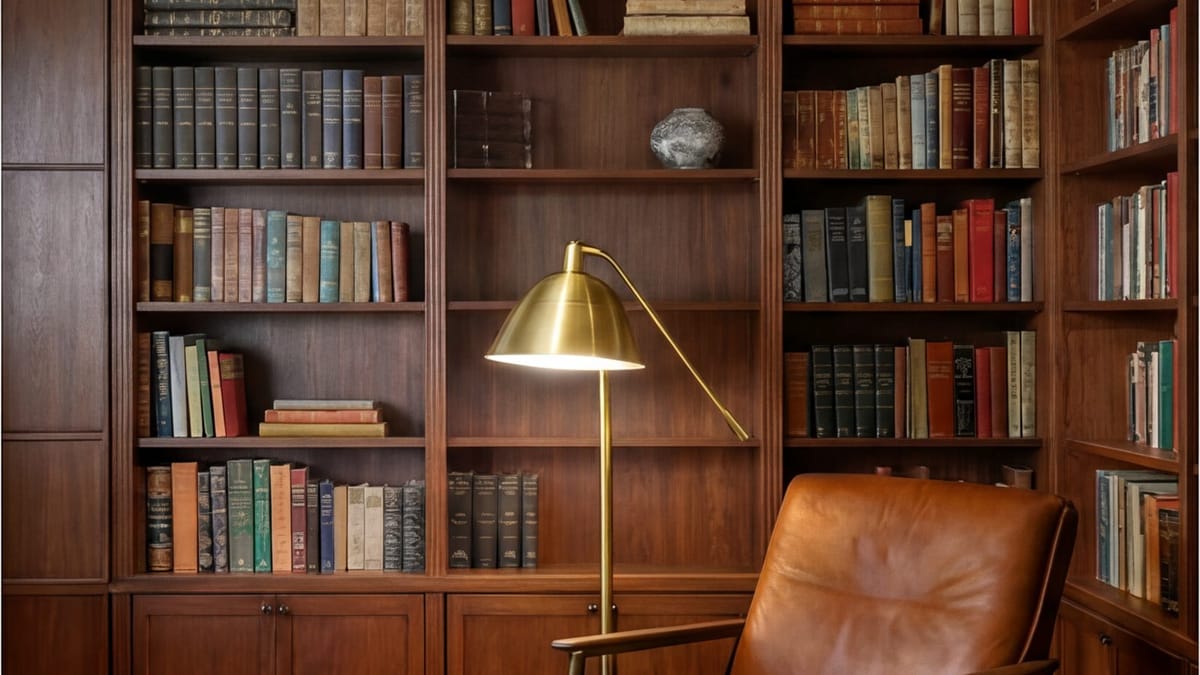
Think about the last time a serious client walked onto one of your job sites. They noticed everything. The way the lumber was stacked. Whether the site was swept. How your superintendent talked to the subs. They weren't inspecting framing — they were reading signals about how you run your business.
Your website gets read the same way. And it gets read first.
A client planning a $2M custom home has usually spent years thinking about it. By the time they start looking for a builder, they've toured model homes, saved hundreds of photos, maybe already hired an architect. When they finally type your name into a browser — because a friend mentioned you, or because you showed up for "custom home builder near me" — they're not casually browsing. They're vetting.
Here's what they're looking at, and what they're quietly concluding.
Premium clients judge the wrapper
It's tempting to believe the work speaks for itself. On a job site, it does. Online, the work only speaks through the way it's presented — and a $2M client can't separate the two.
These are people who buy premium in every other part of their life. They notice when a hotel website feels effortless, when a car configurator feels considered, when a private bank's site feels calm and confident. They don't consciously compare your site to those experiences. But those experiences set their baseline for what "high-end" looks like.
So when they land on a builder site with a cramped layout, a stock photo of a hammer and a hard hat, and a slider that hasn't changed since it was installed, the conclusion is fast and unfair: this builder doesn't sweat the details. That's a brutal thing to signal to someone about to trust you with eighteen months of their life and a seven-figure budget.
We've covered the broader buyer mindset in what premium homebuyers look for on a builder's website. This article zooms in on the very top of the market — and the specific things that client notices first.
1. Design quality: does it feel like your homes?
The first thing a high-end client registers isn't a headline or a photo. It's a feeling. Within a few seconds, they've decided whether your site feels premium or ordinary.
That feeling comes from things most builders never think about:
- White space. Luxury breathes. Crowded pages with every service, award and badge stacked on top of each other read as anxious.
- Typography. A refined typeface, used consistently, does more for perceived quality than any tagline.
- Restraint. Fewer colors, fewer animations, fewer things competing for attention.
- Polish. Aligned edges, consistent image ratios, no broken links, no "Lorem ipsum" left in a footer.
The template problem
Here's the uncomfortable truth: sophisticated clients can spot a template. Not because they know web design, but because they've seen the same layout on a dentist's site, a landscaper's site and three other builders in your market.
When your site looks like everyone else's, you're telling a client you're interchangeable. At the top of the market, interchangeable means you compete on price — exactly where you don't want to be.
A site that feels custom doesn't need to be extravagant. It needs to look like it was made for your company, around your work, with decisions that reflect your taste.
2. Project photography: the work, shown properly
A $2M client is buying your judgment — your eye for proportion, materials and light. Photography is the only way they can evaluate that before meeting you.
That means phone snapshots don't cut it. Neither do a dozen nearly identical angles of the same kitchen. What they want to see:
- Professional, architectural photography with true colors, straight verticals and natural light.
- Big images. Full-width, high-resolution, not thumbnails in a tiny grid.
- Detail shots. The stair stringer, the steel window detail, the mitered stone. This is where craft shows up.
- Context. Where the home is, what the brief was, what made it hard. A project with a story beats a project with twenty photos.
If you've completed beautiful homes but don't have professional photos of them, that's the single highest-return fix on this list. Book a photographer for your next completion. Build it into the project budget if you have to.
For more on structuring the gallery itself, see how a project portfolio turns browsers into buyers.
3. Process documentation: proof you've done this before
Here's what keeps a $2M client up at night: not that you'll build a bad house, but that the process will be chaos. Budget surprises. Silent weeks. Decisions made without them. Stories from friends who swore they'd never build again.
Your website is where you get ahead of that fear.
The builders who win at this level spell out how they work — clearly, calmly and specifically:
- How the first conversation works and what you'll want to know.
- How preconstruction, design and estimating fit together.
- How budgets and allowances are managed and communicated.
- How the client stays informed during construction — weekly updates, a client portal, scheduled site walks.
- What happens at handover and after move-in.
Notice what this does. It turns an unknown into a plan. And it filters for the right clients — the ones who value a disciplined process over the cheapest bid.
Show your team
Process is delivered by people. A high-end client wants to see who will actually run their build: the project manager, the superintendent, the person handling selections. Real photos, real names, real roles. Stock photography here is worse than nothing.
4. Responsiveness: what happens when they reach out
Your website makes a promise. What happens after someone fills out the form either keeps it or breaks it.
A premium client notices:
- How easy it is to reach you. A tappable phone number, a short form, a clear next step. Not a ten-field form demanding budget, lot status and timeline before you've said hello.
- What you say will happen next. "We'll call within one business day to set up a short intro conversation" is reassuring. Silence after submitting is not.
- How fast you actually respond. If your site says you'll call tomorrow and you call next week, you've confirmed their worst fear about builders — before the project even starts.
This is where many builders lose high-end leads without ever knowing it. The inquiry came in on a Friday, sat in a shared inbox, and by Tuesday the client had booked a call with someone else.
What to fix: Route every inquiry to a person who owns it, set an internal response standard, and put an honest version of it on your site. Then keep it.
5. Freshness and proof of life
A client spending this much wants a builder who is busy, current and in demand. Your site either confirms that or contradicts it.
Red flags they pick up on:
- The newest project is several years old.
- A blog that stopped mid-sentence a few years ago.
- A copyright year in the footer that's out of date.
- An Instagram feed embed showing posts from long ago.
- A testimonials page with three quotes and no names.
None of these is fatal on its own. Together, they suggest a business that's either struggling or not paying attention. Neither inspires confidence.
The fix is simple, if not easy: add every completed project, keep testimonials current (named, with permission, and ideally on video), and remove anything you can't keep updated.
6. Consistency across the places they'll check
Your site isn't the only place a $2M client looks. They'll check your Google reviews, your Houzz profile, maybe your Instagram, and increasingly they'll ask an AI tool what it knows about you.
What they're checking for is consistency. Does the builder on Houzz look like the same company as the one on the website? Do the reviews mention the things your site claims — communication, quality, budget discipline? Is the tone the same?
Mismatches create doubt. A polished site paired with a neglected Google profile and a handful of old reviews raises questions. So does the reverse: a strong Houzz presence that leads to a site that feels like an afterthought. If Houzz is doing most of your heavy lifting right now, that's worth rethinking — more on that in why Houzz isn't enough.
A quick self-audit
Open your website on your phone and look at it the way a $2M client would. Be honest:
- Does it feel as considered as the homes you build?
- Could another builder swap in their logo and use it unchanged?
- Are your best three projects shown with professional photography and a real story?
- Could a stranger explain your process after two minutes on the site?
- Is it obvious how to get in touch, and what will happen next?
- Is the most recent project from this year?
If you hesitated on more than one or two, your website is likely costing you clients you never knew you had.
The bottom line
At the top of the market, nobody hires a builder because of their website. But plenty of clients rule a builder out because of it — quietly, in a few seconds, without ever making contact.
Your site's job isn't to close a $2M client. It's to earn the first conversation. Design quality, real photography, a clear process, fast responses and a site that feels made for you — that's what earns it.
Want to see what that looks like for your company? Request a free preview of your new site at gridandmark.com.
By Grid+Mark Teamluxury home builders · builder website · premium clients · first impressions
Related articles

Industry Insights7 min read
What Premium Homebuyers Actually Look for on a Builder's Website
You think clients care about your awards and company history. They don't — at least not first. Here's what high-end homebuyers actually evaluate when they land on a builder's site.
Industry Insights8 min read
Why Your Houzz Profile Isn't Enough Anymore
Houzz was the go-to for builders for years. Here's why relying on a Houzz profile alone costs you leads — and why your own website should be the foundation.

Website Strategy9 min read
Builder Website Teardown: What the Best Sites in the Industry Get Right
A builder website teardown of the patterns top custom home builders share — full-bleed galleries, process timelines, video testimonials and clean navigation.