Lead Generation8 min read
5 Things Every Builder's Website Needs Before Spending a Dollar on Ads
Running Google Ads for your home building company? Fix these five website basics first, or you're paying for clicks that land on a page built to lose them.
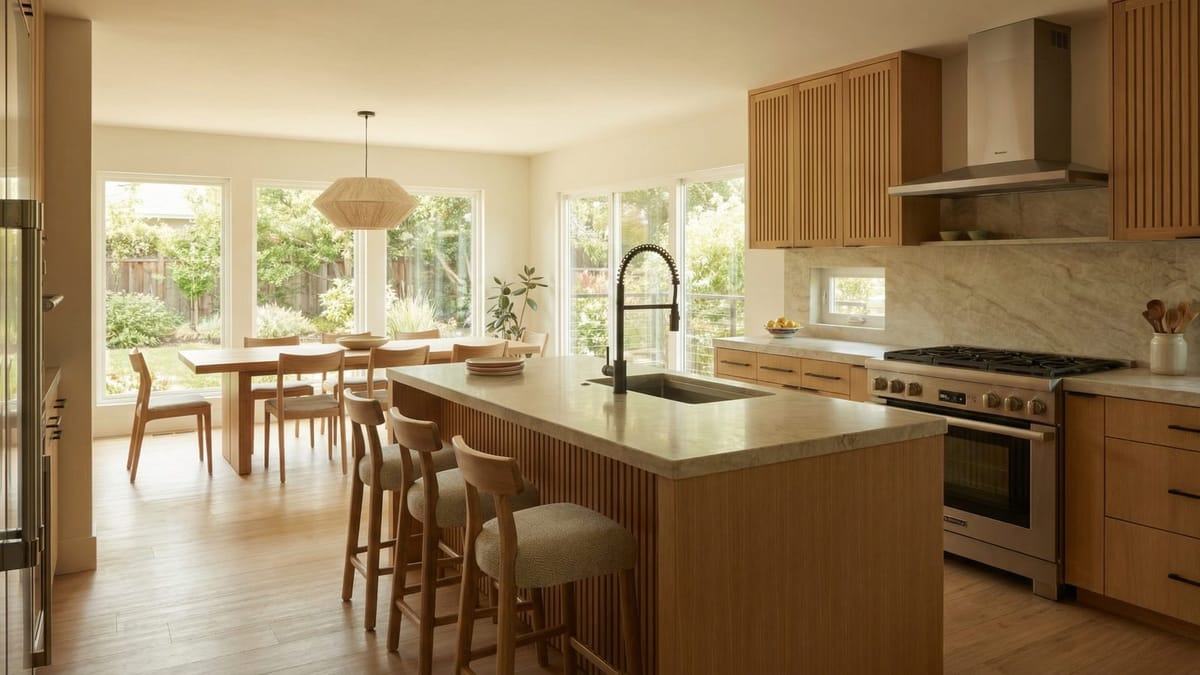
Here's a pattern we see constantly. A builder has a slow quarter. Someone suggests Google Ads. They set up a campaign, point it at their homepage, spend a few thousand dollars over a couple of months, get a trickle of tire-kickers and conclude that "ads don't work for builders."
Ads weren't the problem. The website was.
Paid search is an amplifier. It takes whatever your website already does and does more of it, faster, at a cost per click. If your site converts visitors into conversations, ads multiply that. If your site leaks visitors, ads just help you leak them faster — and you pay for every one.
Before you spend a dollar on clicks, make sure the place those clicks land is ready for them.
Why your website affects what you pay
This isn't only about conversion. Your website affects the price of the ads themselves.
Google Ads assigns your keywords a Quality Score based on three things: expected click-through rate, ad relevance and landing page experience — how relevant and useful your page is to the people who click. Google compares your landing page against those of other advertisers competing for the same searches.
A weak landing page doesn't just convert worse. It can make each click more expensive and your ads less likely to show. You pay twice for a bad website.
So here are the five things to fix first.
1. A site that loads fast — on a phone
Someone who clicks your ad has already shown intent. They also have zero patience. If your page takes ages to load over a cellular connection, a lot of them hit the back button and click the next builder's ad. You still pay for the click.
Builder sites are particularly prone to this because they're built around big, beautiful photos — usually uploaded straight from the photographer at full resolution.
What to check
- Run your landing page through Google's PageSpeed Insights and look at the mobile score, not desktop.
- Look at Largest Contentful Paint. Google considers 2.5 seconds or less "good." If you're well over that, fix it before launching a campaign.
- Compress and resize images. A hero image doesn't need to be a 12MB file.
- Kill the auto-playing background video on your ad landing page, or make sure it's lightweight and doesn't hold up the page.
A lot of your ad clicks will come from phones. Test on a phone, on cellular, not on your office Wi-Fi.
2. A service area that's impossible to miss
A visitor from a search ad wants to know one thing immediately: do you build where I want to build?
Too many builder sites make people dig for this. The service area lives in a footer, or on the About page, or nowhere at all. Meanwhile your ad was targeted to a 40-mile radius and you're paying for clicks from people who can't tell whether you work in their town.
What to fix
- State your service area near the top of the page in plain language: "Custom homes across [County] — including [Town], [Town] and [Town]."
- If you run ads for different markets, send each one to a page about that market, not to your generic homepage.
- Be honest about where you don't build. Saying it clearly filters out unqualified leads before they cost you a sales call.
Clarity here does more than reassure the right buyers. It quietly turns away the wrong ones — which matters when every click has a price.
3. A portfolio with real photos of real homes
Paid traffic is cold traffic. These people have never heard of you. They didn't get a referral from a friend, so there's no built-in trust. Your work has to do all the convincing, quickly.
That means:
- Real photography of homes you built. Not stock images. Not just renderings. Buyers at this level can tell the difference, and stock photography on a builder's site is a credibility killer.
- Context on every project. Location, style, size, a sentence or two on what made it special. A labeled project tells a story; an unlabeled grid tells them nothing.
- Your best work first. If you're running ads for luxury builds, the first projects a visitor sees should be luxury builds — not the modest renovation you did in 2019.
If your portfolio needs work, start with how a project portfolio turns browsers into buyers. It's the single best investment you can make before buying traffic.
4. Testimonials that sound like real people
A stranger clicking an ad is wondering whether you're trustworthy enough to handle the biggest purchase of their life. Your photos show you can build. Testimonials show you're good to work with — which, for most buyers, is the bigger worry.
What makes testimonials work:
- Full names and context, with the client's permission: "Sarah and James, built in [Town], 2025." Anonymous initials read as made up.
- Specifics over superlatives. "They told us about a framing delay before we noticed it and adjusted the schedule without drama" beats "Great builder, highly recommend!" every time.
- Placement near the decision. Put a testimonial right next to your contact form, not on a separate page nobody visits.
- Consistency with Google. Buyers will check your Google reviews. If your website is glowing and your Business Profile has three reviews from 2021, it raises questions. Start building that up now — see getting more Google reviews as a builder.
If you have video testimonials, even short phone-shot ones, use them. They're hard to fake and buyers know it.
5. A dead-simple contact flow
This is where most ad budgets actually die.
Someone clicks your ad, likes what they see, decides to reach out — and hits a 12-field form asking for budget, lot status, timeline, square footage, number of bedrooms and how they heard about you. Half of them quit. You paid for every one.
What a good contact flow looks like
- A short form. Name, email, phone, and an optional "Tell us a little about your project" box. You can qualify on the phone.
- A tappable phone number in the header on mobile. Some buyers would rather just call.
- A clear promise about what happens next. "We'll call within one business day to set up a 20-minute intro conversation." Uncertainty stops people from submitting.
- A contact option on every page, not just the Contact page. If the visitor is convinced on a project page, the next step should be right there.
- A thank-you page that confirms it worked — which also gives you a clean way to track conversions in Google Ads.
That last point matters more than it looks. If you can't measure which clicks turned into inquiries, you can't tell which keywords are worth paying for. Set up conversion tracking on form submissions and phone calls before the campaign starts, not after.
Once inquiries start coming in, you'll want a fast way to tell serious buyers from browsers. That's a topic in itself — see lead scoring for builders.
A pre-launch checklist
Before you turn on a single campaign, run through this:
- Your landing page loads quickly on a phone over cellular.
- Your service area is visible without scrolling.
- Your landing page shows real projects relevant to the ad's promise.
- At least two or three specific, named testimonials are on the page.
- There's a short form and a tappable phone number above the fold on mobile.
- Conversion tracking is live and tested — you've submitted the form yourself and seen it register.
- Your Google Business Profile is complete, because some ad clickers will look you up before calling.
If any of these are a "no," fix that first. It will do more for your results than any amount of bid tweaking.
What ads can and can't do
Ads can put you in front of people actively searching for a builder in your area, today. That's genuinely valuable, especially when you're entering a new market or your referral pipeline runs dry.
What ads can't do is make a weak website persuasive. They can't make a slow page fast, a vague service area clear or a stock-photo portfolio credible. They just put more people in front of whatever you've got.
For most builders, the right order is: fix the website, build your Google Business Profile and organic presence, then layer ads on top to accelerate what's already working. If you're not sure where your site stands, why your builder website isn't getting leads is a good place to start the diagnosis.
The bottom line
Every dollar you spend on ads is a bet that your website will turn a stranger into a conversation. Make that bet only when the odds are in your favor: fast pages, a clear service area, real work, believable proof and a contact flow that takes thirty seconds.
Get those five right, and ads become a lever. Skip them, and ads become an expensive way to learn the same lesson.
Want a site that's ready for paid traffic from day one? See what Grid+Mark builds for builders like you and request a free preview at gridandmark.com.
By Grid+Mark TeamGoogle Ads · landing pages · lead capture · conversion
Related articles
Lead Generation9 min read
The Builder's Guide to Getting Google Reviews (Without Being Awkward About It)
Google reviews drive local rankings and buyer trust. Here's how custom home builders can ask for reviews at the right moment, follow up, and respond well.
Website Strategy7 min read
Why Your Builder Website Isn't Getting You Leads (And What to Fix)
Most custom home builder websites look fine but generate zero inquiries. Here's what's actually going wrong — and the fixes that turn a digital brochure into a lead engine.
Industry Insights8 min read
Why Your Houzz Profile Isn't Enough Anymore
Houzz was the go-to for builders for years. Here's why relying on a Houzz profile alone costs you leads — and why your own website should be the foundation.